
Hot

AnyRec Screen Recorder
Capture every moment. Record like a pro.
Secure Download
5 Ways to Record MP3 on Mac Plus Fixes for Common Issues

You probably think that recording a quick audio on Mac would be a two-click operation. But macOS does not always play like that. How to record MP3 on Mac without any technical course, then? Do you wish to record both internal and external sound? The good news is you don't need to change your operating system, as the five best ways to record MP3 audio on Mac are here! Besides steps, you'll see troubleshooting fixes to rescue your MP3 recordings.
Guide List
Record Audio on Mac with AnyRec Screen Recorder (System Audio + Microphone, No Driver Setup) Capture Audio on Mac with QuickTime Player (Microphone Only) Record System Audio on Mac with BlackHole (Free, Technical) Record MP3 audio on Mac with Voice Memos (Microphone Only, Simplest) Record Mac audio with Audacity (Free, Full Control, Requires BlackHole for System Audio) Troubleshoot MP3 Audio Recording on MacRecord Audio on Mac with AnyRec Screen Recorder (System Audio + Microphone, No Driver Setup)
While certainly there are built-in tools to record MP3 files on Mac, they hit an issue when you try to add the internal computer sound alongside your voice. To skip all technical steps entirely, use AnyRec Screen Recorder. Designed for recording on-screen activities, this software captures both system audio and your mic voice at the same time with just a click. You don't need extra drivers, software, or complex configurations.
Record Mac's internal sounds and your mic without extra drivers like BlackHole.
Clean up your microphone with real-time mic noise cancellation and enhancement.
Save recordings to MP3, AAC, M4A, or WMA with adjustable settings.
Quick preview and trim unwanted silence before exporting.
Secure Download
Secure Download
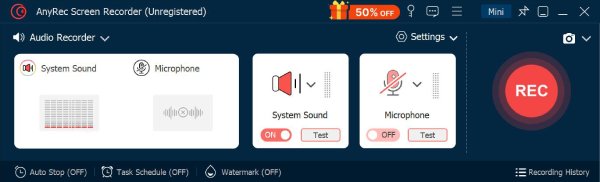
Step 1.Start AnyRec Screen Recorder on your Mac. From the clean dashboard, click the "Audio Recorder" button.
In the Audio Recorder window, toggle ON the "System Sound" to capture audio playing from your Mac. For your voice, toggle ON "Microphone". Click the small arrow next to it to choose your microphone and enable enhancement if needed.
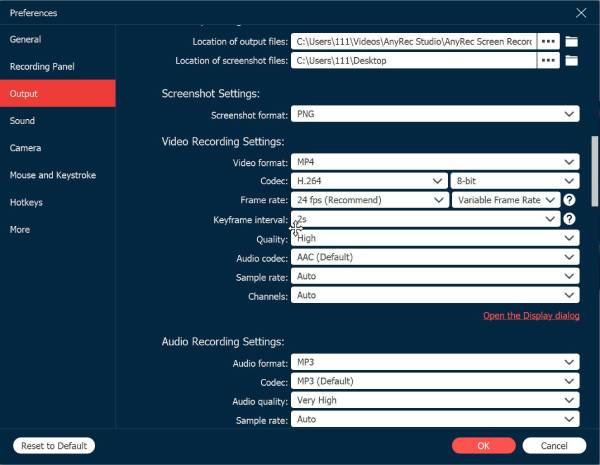
Step 2.Click the "Output Settings" button. Navigate to the "Audio" section by scrolling down, set your preferred format to "MP3". Then choose your desired audio quality. Click the "OK" button to save your preferences.
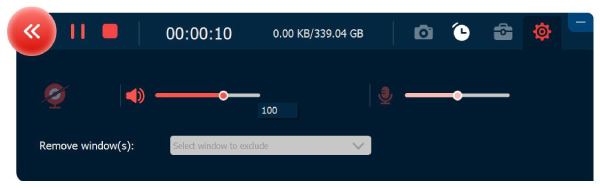
Step 3.Click the "REC" button once done. When you're finished, click the "Stop" button. A preview window will pop up, allowing you to listen to your audio and trim any parts before clicking the "Save" button to export your fresh MP3 to your Mac.
Capture Audio on Mac with QuickTime Player (Microphone Only)
You probably know QuickTime as a dependable video player that's been in your Applications folder for so long. But it has a secret recorder that can help you record MP3s on Mac, too. For a quick voice memo without installing apps, QuickTime has your back.
Step 1.Launch QuickTime Player from the Applications folder. In the top menu bar, click on "File" and select "New Audio Recording".
Step 2.A compact recording window will show up. Click the small "downward arrow" to select your desired microphone and choose your recording quality.
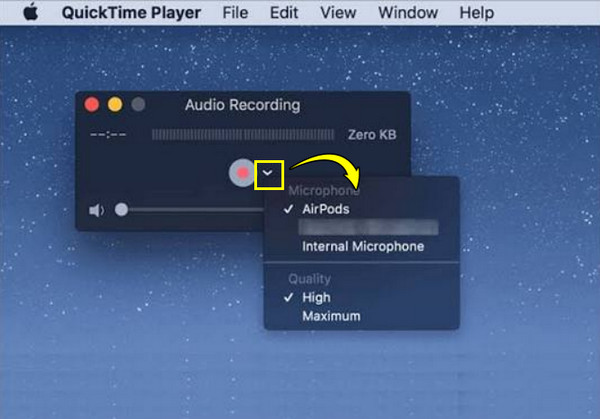
Step 3.Click the "Record" button to start talking, and stop it once finished. Save your file by going to "File" then "Export As", and "Audio Only".
Record System Audio on Mac with BlackHole (Free, Technical)
While the built-in player is ideal for recording voice, what happens when you need to record an MP3 file on Mac, but this time it is the system audio? Since Apple blocks internal recording for privacy reasons, you need BlackHole. This virtual audio driver loops your system's output directly into an input channel.
Step 1.Get the BlackHole driver installed. Launch "Audio MIDI Setup" on your Mac, then click the "Add" button in the corner and select "Create Multi-Output Device".
Step 2.Next, make sure both "Built-in Output" (or headphones) and "BlackHole 2ch" boxes are checked to hear the audio while it records.
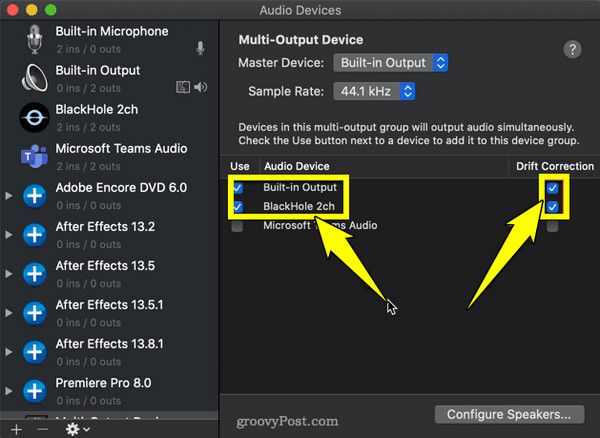
Step 3.After that, click on your Mac's volume icon in the menu bar and set your output device to "Multi-Output Device".
Step 4.Start your recording app, then select "BlackHole 2ch" as your input mic, and click "Record".
Record MP3 audio on Mac with Voice Memos (Microphone Only, Simplest)
If you're looking for a simple way to record MP3s on MacBook, look no further than the built-in Voice Memos app. It features a clean interface, automatic syncing across your Apple devices via iCloud, and even a built-in audio enhancement feature. For students or anyone who simply wants to press a button and start talking, here's how to record Mac audio with Voice Memos:
Step 1.Open Voice Memos on your Mac. Click the "Record" button to instantly start capturing your mic's audio. You can pause then resume the session.
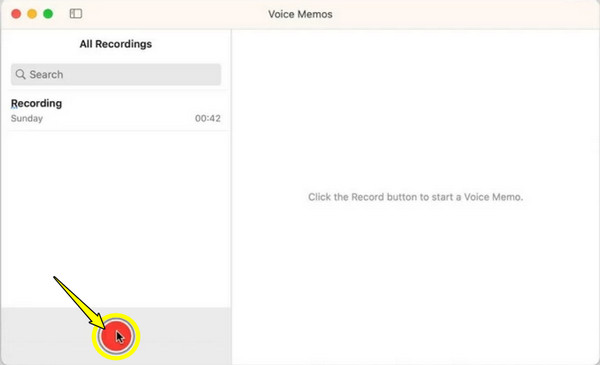
Step 2.Later, click the "Done" button to save your track. Then, click the "Options" icon in the corner and toggle ON "Enhance Recording".
Step 3.Simply drag and drop the recording straight onto your desktop.
Record Mac audio with Audacity (Free, Full Control, Requires BlackHole for System Audio)
For those times when a simple record button is not enough, record MP3 on Mac using a full-fledged software, Audacity. This tool gives you multitrack editing, precise wave visualizations, and a huge library of effects to tweak, boost, or enhance your sound. However, it needs some help to record internal system audio, and this is where you need BlackHole again to record computer audio with Audacity.
Step 1.Launch Audacity on your Mac, and ensure you have "BlackHole" installed for recording internal system audio. Locate the "Audio Setup" toolbar, and set your Host to "Core Audio".
Step 2.Next, for the "Recording Device", choose your mic if you want to record your voice, or simply pick "BlackHole 2ch" to capture internal system sound. Click the "Record" button to begin capturing your track.
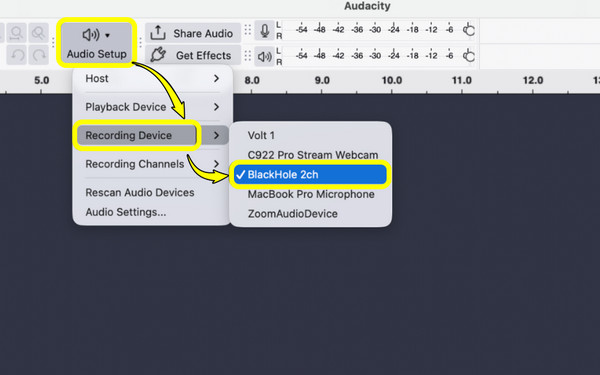
Step 3.As soon as you stop the recording, you can edit, cut, or apply effects to your audio. After all that, click on "File" then "Export Audio", and choose "MP3 Files".
Step 4.Name your audio track, save it, and it is ready to share!
Troubleshoot MP3 Audio Recording on Mac
Audio recording on Mac can sometimes cause issues. You might find yourself facing the unfamiliar extension, quiet track, or others, but here's a quick, simple troubleshooting guide to fix the most common MP3 audio recording on Mac hiccups.
1. My Recording Isn't an MP3. macOS apps such as QuickTime are designed to focus on Apple's default formats like M4A rather than exporting directly to MP3.
Quick Fix: Import your saved M4A audio into Apple Music. Head to Music > Settings > Files > Import Settings, change Import Using to MP3 Encoder. Select your file and click on File > Convert > Create MP3 Version.
2. Audio Sounds Too Quiet. Your Mac's volume might be down, or the recorder is not using the correct gain levels.
Quick Fix: Open System Settings, then go to Sound, then Input. Choose your active mic and drag the Input volume slider to the right.
3. Recording Has Background Noise. Sensitive microphones can easily pick up room sounds such as fans, air conditioners, or traffic.
Quick Fix: For Voice Memos, toggle ON Enhance Recording from the Options icon. Also, you can go to your System Settings > Sound > Input, and check the Use ambient noise reduction box. Meanwhile, if you're using Audacity, apply noise reduction from Effect > Noise Removal and Repair > Noise Reduction > Get Noise Profile.
4. MP3 File Is Too Large. Your export settings may be set to an unnecessarily high bitrate, which is too high for standard voice recordings or podcasts.
Quick Fix: For a simple voice memo, 128 kbps is sweet, cutting the file size in half while keeping your voice crisp. If you're using Audacity as a free MP3 compressor, select Constant Bit Rate and 128 kbps/96kbps.
Conclusion
The trick to make an MP3 recording on Mac is simply picking the right tool for your specific task, whether it is a quick memo, recording internal sound or mic at once, or full control over your audio recording. And you don't want to miss the ultimate shortcut, of course. Use AnyRec Screen Recorder to skip the troubleshooting and messing with your Mac's settings. Just record system audio, microphone feeds, or both at the same time, and get a shareable MP3 instantly.
Secure Download
Secure Download
Related Article
About Our Author