
Hot

AnyRec Video Converter
120× faster video conversion and editing. No waiting.
Secure Download
4 Ways to Compress MP3 without Ruining Audio Quality

MP3 files are already smaller than many other audio formats, but long recordings can still become too large for daily use. A one-hour podcast, meeting recording, or audiobook chapter can take up hundreds of megabytes. Compressing MP3 files helps make files easier to store, email, upload, and share. However, if you compress audio too much, the audio sounds worse. The trick is knowing which settings to touch, mainly bitrate, without wrecking the sound. Done right, you can cut a file down by half or more and barely notice the difference.
Guide List
What Makes an MP3 File Smaller How to Compress MP3 without Losing Quality How to Compress MP3 Online 2 Other Ways to Make an MP3 Smaller Tips for MP3 CompressionWhat Makes an MP3 File Smaller
This can be regarded as the question of "how much can you reduce an MP3?". Once you know those items, you can shrink the audio file size effectively.
Lower the Bitrate
Bitrate is one of the biggest factors that affect MP3 file size. It controls how much audio data is processed every second. A higher bitrate usually means better sound quality, but a larger file.
Common MP3 bitrate options include:
- • 320 kbps: Best sound quality, but the file is larger.
- • 256 kbps: Good quality with a smaller file.
- • 192 kbps: A good middle ground for size and quality.
- • 128 kbps: Smaller files, but you may notice some quality loss.
For music, keeping the bitrate higher is usually better. A very low bitrate can remove small details and make the music sound dull. You may also notice muddy audio or weaker bass.
Voice recordings are different. Podcasts and audiobooks don't need as much detail. 64-128 kbps is usually enough for speech.
Change the Sample Rate
The sample rate affects how many times per second audio is captured. A higher sample rate can preserve more audio details, but it also increases the audio file size.
The sample rates of 44.1 kHz and 48 kHz are widely used for music and video. Lowering the sample rate can reduce the MP3 size. However, the difference may be noticeable, especially for music with high-frequency sounds.
Use Mono Instead of Stereo
Stereo audio contains two channels, which are left and right. Mono uses only one channel. Therefore, it can significantly reduce the MP3 file size. Mono works for podcasts, voice memos, online classes, lectures, and interview recordings (not for spoken audio and music).
How to Compress MP3 without Losing Quality
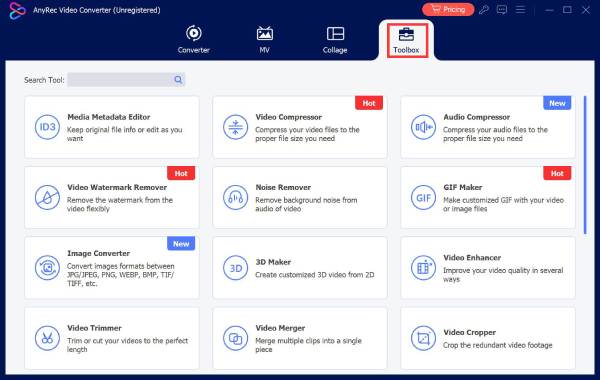
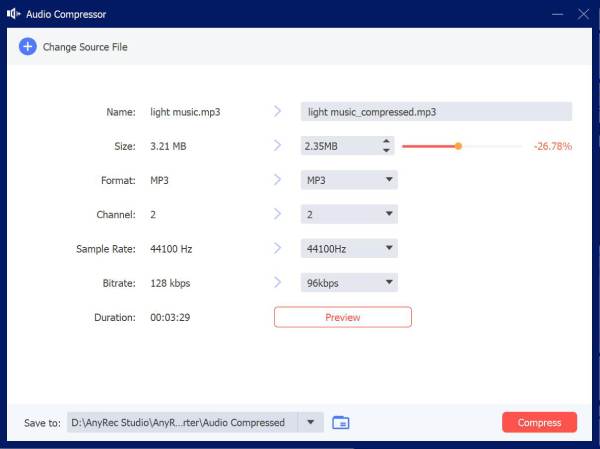
AnyRec Video Converter is useful when you want to get more controls than simply changing an MP3's bitrate. You can find the Audio Compressor in the Toolbox section. It provides multiple ways to reduce the size of MP3 files. You can drag a slider to reach a target size, or manually adjust channel, sample rate, bitrate, and output format before exporting. Moreover, you can boost volume, reduce audio noise, trim long audio files, and get more audio editing tools within the program.

Shrink audio files with 5 more adjustable tools.
Balance the audio file size and acceptable quality.
Batch compress large audio files.
Convert, enhance, and edit audio before compression.
Secure Download
Secure Download
Step 1.Open AnyRec Video Converter. Click the "Toolbox" button at the top.
Step 2.Find and click the "Audio Compressor" button. Upload your MP3 audio. Here, you can manually adjust the bitrate, sample rate, and channel. Or you can drag the size slider to reduce the audio file size. Click the "Compress" button to confirm.
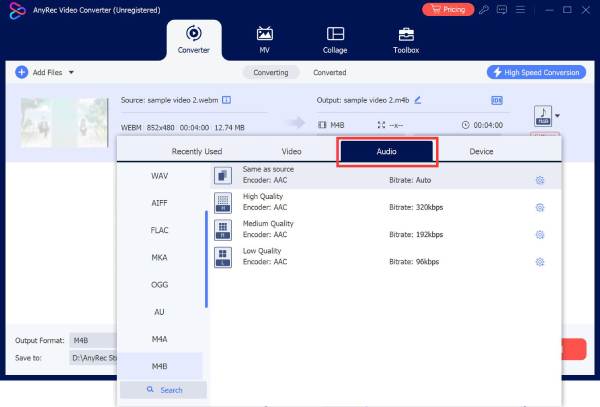
Step 3.If you want to get more output formats and profiles, you can go back to the main interface. Click the "Format" button and go to the "Audio" section to access more choices.
How to Compress MP3 Online
If you don't want to install anything, a browser-based MP3 compressor can get the job done in a few minutes. Most online MP3 compressors work the same basic way: upload the file, choose a compression level or target size, then download the result. Just check the maximum file size limit first.
- 1. Search for an online MP3 compressor, such as FreeConvert MP3 Compressor.
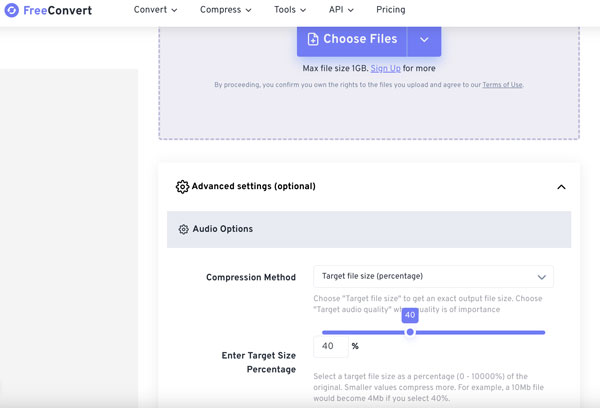
- 2. Click the "Choose Files" button to import up to 1 GB of MP3 files.
- 3. In the Advanced Settings section, you can set the audio compression as target file size (percentage), target file size (MB), or target audio quality. Click the "Apply to All" button to save changes.
- 4. Click the "Compress" button to reduce the size of the MP3 audio online.
- 5. After seeing the "Done" status, click the "Download MP3" button to get smaller MP3 files.
2 Other Ways to Make an MP3 Smaller
Lowering the bitrate isn't your only option. An MP3 can be large because it has extra audio or uses a different format. Try cutting out parts you don't need. You can also convert it to another compressed format to save more space.
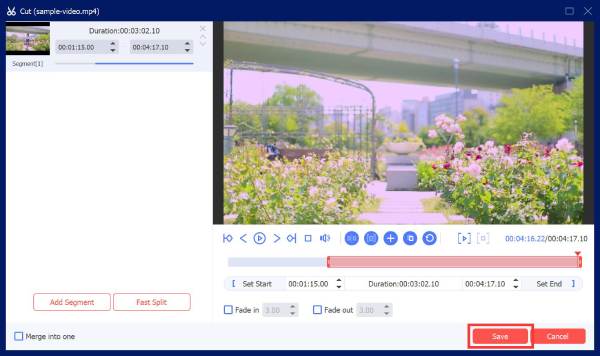
Trim Unnecessary Audio
If your MP3 audio is large due to a long recording, cutting unnecessary parts may work better than reducing the bitrate. Just trim long silent sections, unwanted introductions, empty pauses, repeated content, and other unimportant parts. By audio trimming, you can reduce the audio without changing the quality of the remaining audio.
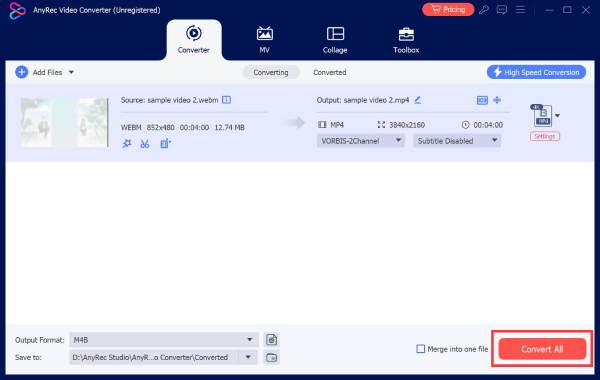
Convert to Another Audio Format
Another option is converting your MP3 to a different audio format with more efficient compression. Some formats can offer a smaller file size while maintaining similar quality. However, be careful that converting MP3 to other lossy formats multiple times can reduce audio quality. If you want to convert an MP3 audio, it is better to keep the original file and avoid repeated conversions whenever possible.
Tips for MP3 Compression
The best MP3 compression settings depend on what you are recording or saving. You can use the following tips to avoid making your files smaller than necessary.
- • For music: Keep the bitrate fairly high when sound quality is important. A setting such as 192 kbps or higher can be a good starting point.
- • For podcasts: You can reduce the bitrate more than you would for music without a major difference in listening quality.
- • For voice recordings: Mono can work well for interviews, lectures, voice memos, and similar recordings. A lower bitrate may also be sufficient, as speech requires less audio data than music.
Conclusion
Making an MP3 smaller usually comes down to a few simple choices: lower the bitrate, adjust the sample rate if needed, and switch to mono when stereo isn't necessary. Trimming dead air or repeated sections helps too, especially for long recordings. If you're only compressing one file occasionally, an online MP3 compressor might be enough. But if you deal with large audio libraries, podcasts, or need more control over the output, AnyRec Video Converter's Audio Compressor makes the process faster and more precise. It also includes audio conversion and other useful tools if you need to do more than just compress MP3 files.
Secure Download
Secure Download
About Our Author