
Hot

AnyRec Video Converter
120× faster video conversion and editing. No waiting.
Secure Download
How to Add Text and Captions in iMovie on iPhone, iPad, Mac

iMovie can handle basic text without much trouble. You can add a title to a video, type your own words, adjust the look, and decide how long it stays on screen. On iPhone and iPad, moving and resizing a title is fairly straightforward. Mac users have more limited positioning options to add text in iMovie. This becomes frustrating when you want plain text in a specific spot, several text boxes on one clip, or more control over how the text looks. In those cases, another editing tool may save time. No matter which decision you make, you can get satisfying results here.
Guide List
How to Add Text in iMovie on iPhone or iPad How to Add Text in iMovie on Mac How to Change Text Style in iMovie How to Add Text to Different Parts of a Video Bypass iMovie's Real Limitations, Get an Alternative to Add Text to VideoHow to Add Text in iMovie on iPhone or iPad
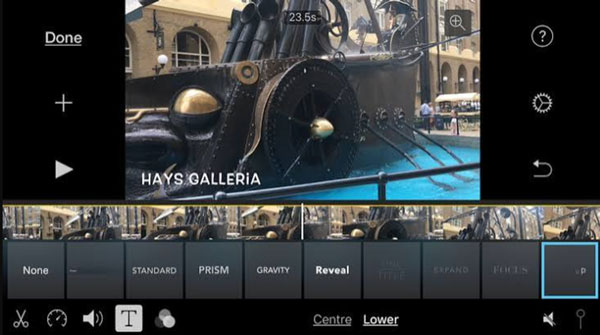
iMovie has a built-in Titles feature for adding text to videos, photos, and backgrounds. You can use it for simple captions, names, introductions, or other short text. The process is quite quick on both iPhone and iPad. After choosing a title style, you can replace the sample text with your own words. You can also drag the title to another spot or pinch it to make it larger or smaller.
- 1. Open your project in iMovie.
- 2. Tap the video clip or photo where you want to add text.
- 3. Tap the "Titles" button with the "T" icon at the bottom of the screen.
- 4. Choose a title style from multiple templates.
- 5. Tap the sample text in the viewer.
- 6. Tap the "Edit" button, then enter your text.
- 7. Then tap the "Done" button to insert text in iMovie app.
How to Add Text in iMovie on Mac
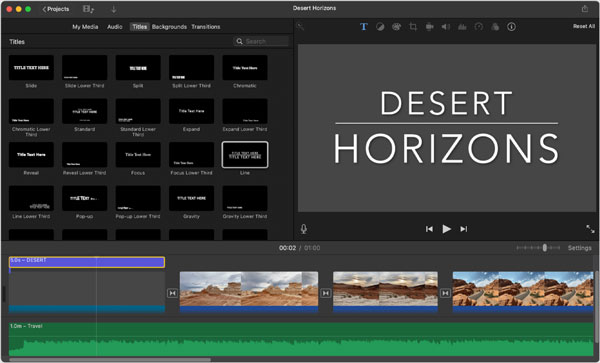
Adding text in iMovie on Mac only takes a few steps. You can put a title over a video clip, photo, or background, then customize its appearance. This works well for opening titles, names, short explanations, and closing credits.
- 1. Open your iMovie project.
- 2. Move the playhead to where you want to insert the text.
- 3. Click the "Titles" button above the browser.
- 4. Double-click a title style or drag it onto the timeline above your video.
- 5. Double-click the title in the timeline.
- 6. Type your text in the viewer.
- 7. Click the "Apply" button to add text and titles in iMovie.
How to Change Text Style in iMovie
The default iMovie title style won't necessarily work for every video. You can customize the text to better match your footage.
- Font: Choose a style that fits the video. So, the video will not be difficult to read.
- Text size: Make the text large enough to see, especially on smaller screens.
- Color: Pick a color that makes your text stand out from the background.
- Position: Move the text away from faces or other important details.
- Duration: Keep the text on screen long enough for viewers to read it.
- Title style: Try different iMovie text styles to find the one that suits your footage.
How to Add Text to Different Parts of a Video
If you want different text to appear at different moments, use a separate title for each part of the video. This is more practical than trying to keep one title on screen for the whole video. For example, you can add an opening title at the start, a person's name during an interview, a short explanation in the middle, and credits at the end. iMovie treats each title separately. So, you can edit its text, style, position, and timing.
On Mac, you can place a title above the relevant video clip, and adjust its duration by dragging either edge of the title bar on the timeline. You can also drag the whole title to another point in the timeline. This makes it easier to match each piece of text with the moment where it is needed.
For example:
- Beginning: Add the video title or introduction.
- Interview: Show the speaker's name.
- Middle: Add an explanation or reminder.
- Ending: Add credits or a closing message.
On iPhone or iPad, you can also use different titles on different clips. If you need text to appear at a specific moment in a longer clip, you can split the clip to gain more control over timing. iMovie allows you to split clips and add different titles to each section.
Bypass iMovie's Real Limitations, Get an Alternative to Add Text to Video
iMovie is convenient, but its text tools have some limits. These can become noticeable when you need more control over your text:
- Fixed title styles: Most title styles include built-in animation.
- Limited positioning: You can't freely move the text.
- Two video tracks: Multiple text elements can require splitting clips as a workaround.
- No built-in SRT import: You can't just drop in a subtitle file. You'll have to add subtitles in iMovie manually.
- Mac and iOS only: There is no official version of iMovie for Windows.
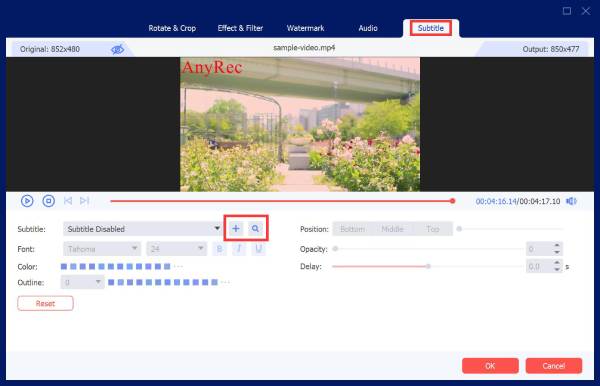
iMovie is fine for adding a simple title or name. But it can feel restrictive when you need subtitles, captions, or text that appears at different times. AnyRec Video Converter gives you more control over subtitle formatting. You can import a subtitle file and adjust the font, color, opacity, position, size, and outline before exporting the video. This makes it a useful option when your project needs more than iMovie's preset title styles.

Add titles, captions, and texts to your video.
Change and insert subtitles with customizable options.
Remove text, unwanted objects and more from your video.
Improve video quality of old, low-resolution, and shaky videos.
Secure Download
Secure Download
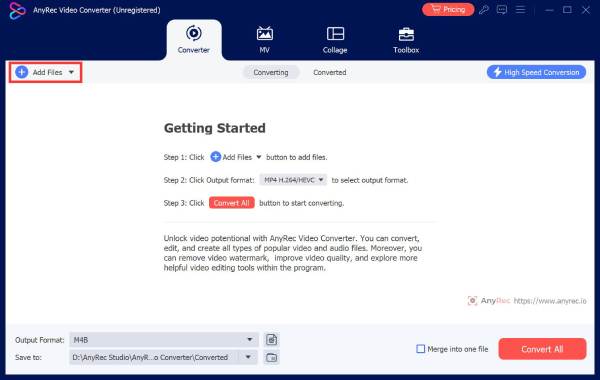
- 1. Open AnyRec Video Converter. Click the "Add Files" button. Upload your video into the program.
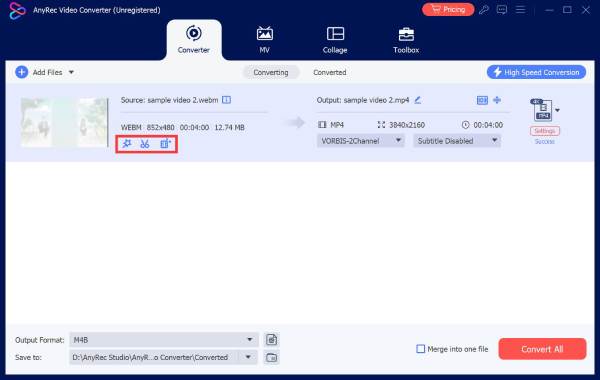
- 2. Click the "Edit" button to get quick video editing tools.
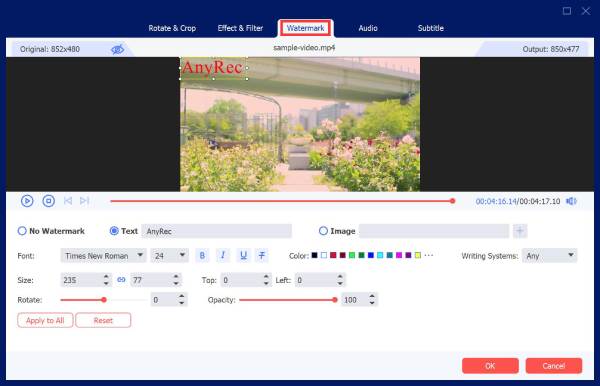
- 3. Go to the "Watermark" section. Enable the toggle before "Text". Now you can type and add text to any position of your video.
- 4. Or you can go to the "Subtitle" section to add subtitles to your video.
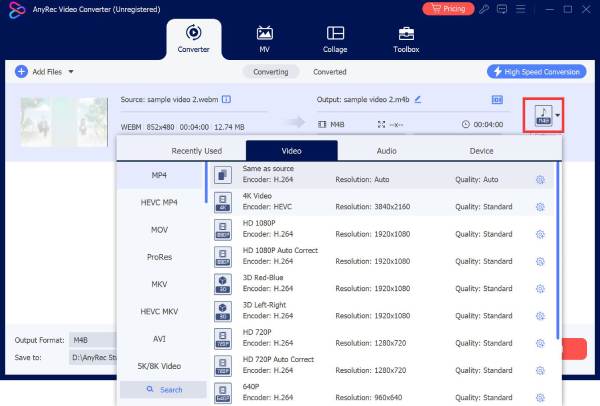
- 5. Go back to the main interface. Click the "Format" button. Scroll down and select the output format. At last, click the "Convert All" button to get your video with text added.
Conclusion
Inserting text in iMovie is simple when you only need a title, name, or short message. Its built-in Titles feature covers the basics, but things can get tricky when you need more text on screen or better control over subtitles. If iMovie feels too limited, AnyRec Video Converter is worth trying. It lets you add subtitles and adjust their font, color, opacity, position, and outline. You can get more editing tools than iMovie in the same program.
Secure Download
Secure Download
Related Articles:
About Our Author