
How to Fix Pixelated/Grainy Videos: A Comprehensive Guide

If you are curious about how to fix pixelated videos, then you've come to the right place. Blurry videos often lose many details, causing you to miss out on a lot of interesting content. Don't worry. This post introduces you to three methods, each using different tools, to quickly restore videos and restore their detailed features. You can choose the video depixelizer that best suits your needs.
Guide List
Why Videos Look Pixelated and Grainy How to Fix Pixelated Grainy Videos of Any Format VLC Media Player: A Handy Way to Fix Pixelated/Grainy Video An Online Solution to Fixing Pixelated/Grainy VideosWhy Videos Look Pixelated and Grainy
Before you start learning how to unpixelate a video, it is very helpful to understand why they appear pixelated and grainy. By understanding and addressing these possible factors, you can more effectively restore your video to have clearer details. You can read the following content to understand several key factors quickly.
1. Weak Signal Input
If you are watching the video online, its quality will be greatly affected by the condition of your network connection. Although video quality depends on the platform where the video is played, if your network connection is unstable, the platform will automatically reduce video quality to ensure smooth playback. Therefore, when watching videos online, try to use a stable network connection as much as possible to fix pixelated or grainy videos.
2. Hardware/Settings Mismatch
Then why does offline viewing of local videos also result in blurry video quality? This is largely due to the mismatch between your player, especially its hardware or settings. For instance, a 4K video will require a player that can handle high-resolution parameters such as 3840×2160 and other specific details to display its original video quality. At this point, the poor video quality is due to the mismatch between the hardware and the settings. In this case, replacing the player is an ideal way to unpixelate a video.
3. Excessive Video Compression
Often, to reduce file size or save storage space, some platforms or video sharers compress videos. This certainly achieves the goal of saving space effectively. However, this operation will also degrade video quality due to data loss, resulting in a grainy effect. If you really need to compress videos while trying to fix pixelated or grainy ones, you can balance quality and size as much as possible by previewing in a video compressor app.
How to Fix Pixelated/Grainy Videos of Any Format
When it comes to a tool that can perfectly fix any pixelated or grainy video, AnyRec Video Enhancer is the most reliable option. This tool supports almost any format, so you don't need to worry about compatibility. For unclear videos, you can customize various parameters to suit your needs, significantly improving video quality. No matter what type of video you are working with, AnyRec Video Enhancer can ensure that details are clearly displayed and brought back to life.

Support improving pixelated video to 720p, 1080p, and 4K.
Remove video noise and dirt-like dots on the video screen.
Enhance video with resolution, encoder, frame, and so on.
Provide an advanced anti-shaky technology to reduce blur.
Secure Download
Secure Download
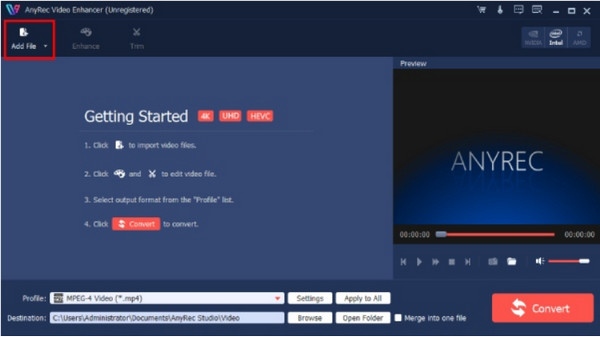
Step 1.Launch AnyRec Video Enhancer and click the "Add File" button to import the pixelated or grainy video file.
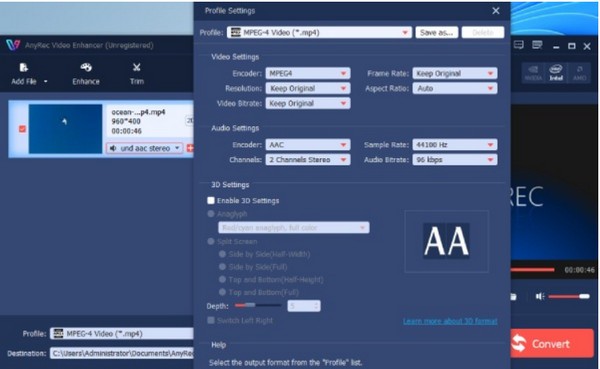
Step 2.Click the "Settings" button to adjust detailed parameters to unpixelate a video. Then, click the "OK" button.
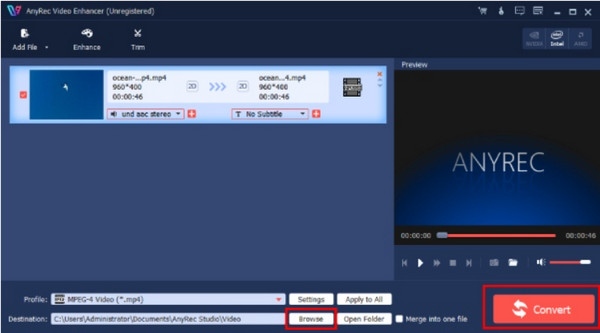
Step 3.In the main interface, click the "Browse" button to select a destination folder. Finally, click the "Convert" button.
VLC Media Player: A Handy Way to Fix Pixelated/Grainy Video
For users accustomed to using VLC media player to watch videos, it is a reliable video depixelizer. However, it should be noted that this built-in method is only applicable to repairing AVI files. As for the operation method, you can follow the steps below to complete it quickly.
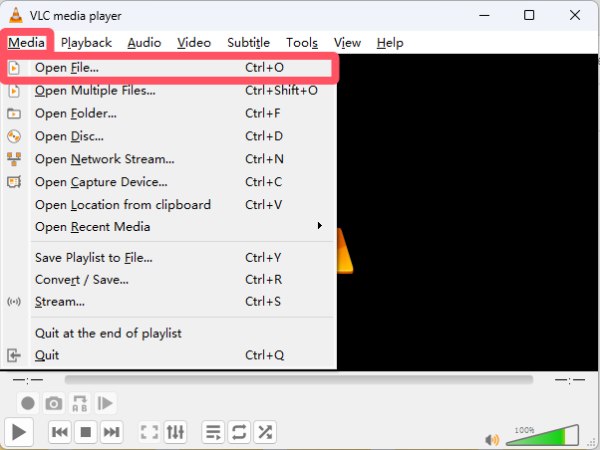
Step 1.Launch VLC media player and click the "Open File..." button under the "Media" tab to import the video file.
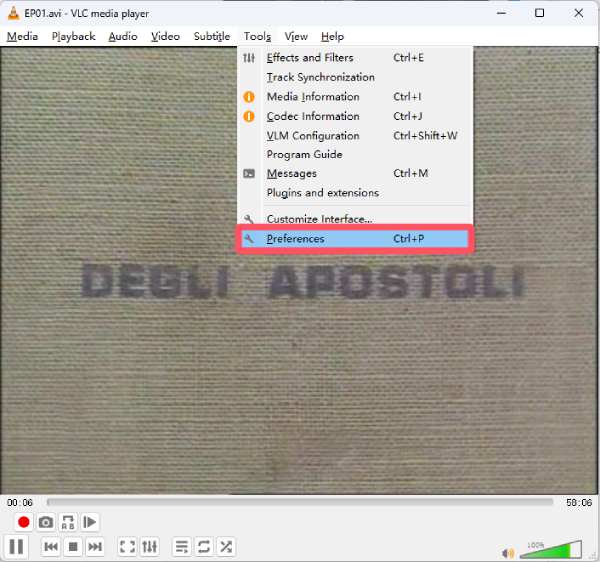
Step 2.Under the "Tools" tab, click the "Preferences" button to summon a pop-up window.
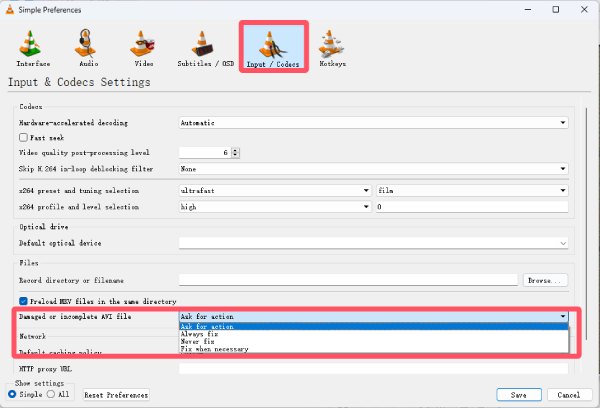
Step 3.Under the "Input / Codecs" tab, click the "Damaged or incomplete AVI file" button, then click the "Always fix" button to depixelate AVI videos.
Tips
Although VLC media player only supports restoring AVI video files, it allows you to play video files in almost all formats. Thanks to its solid hardware and codec support, VLC allows you to play some high-quality videos. For example, you can play H.265 and HEVC videos on VLC.
An Online Solution to Fixing Pixelated/Grainy Videos
If you receive video files to share in your browser but find they look pixelated or grainy, then using an online tool in your browser is a very convenient option. You don't need to download any additional tools to fix pixelated or grainy videos; you can do it entirely online. However, during the test, we found that even for processing videos around 100 MB in size, the entire process would take approximately 3 to 4 minutes.
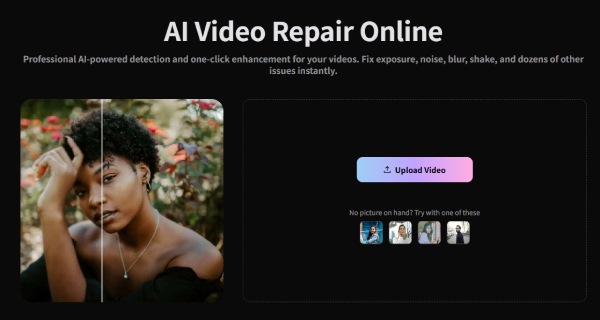
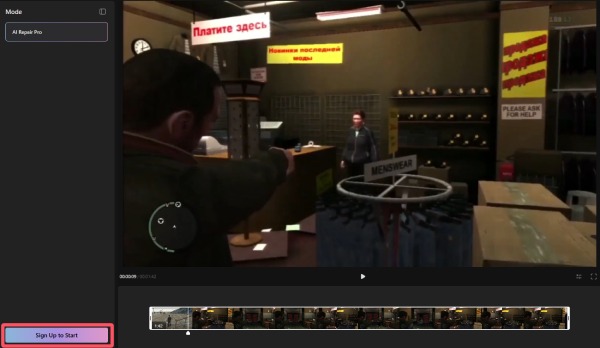
Step 1.Navigate to the official wink.ai website and click the "Upload Video" button to upload the pixelated video.
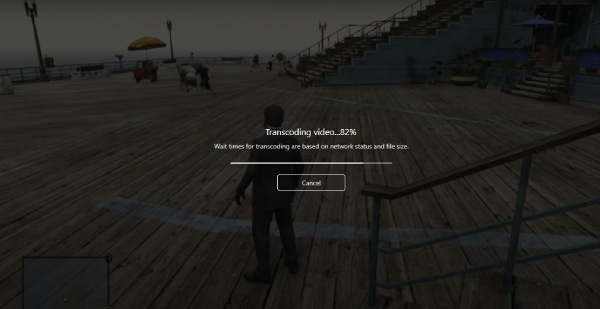
Step 2.It will take a little time for this video depixelizer to transcode the video file. Wait until it finishes.
Step 3.The tool will automatically select the "AI Repair Pro" mode. You only need to click the "Sign Up to Start" button and sign in to apply the restoration.
Conclusion
Now you already know how to fix pixels on videos through 3 different methods. Each method has its own advantages and limitations. If you want to fix your video in the simplest yet most customizable way and bring it to its best condition, choose AnyRec Video Enhancer for a perfect result.
Secure Download
Secure Download
Related Articles
About Our Author